Born in Basle
Mathias Steinauer was born in Basle, Switzerland.
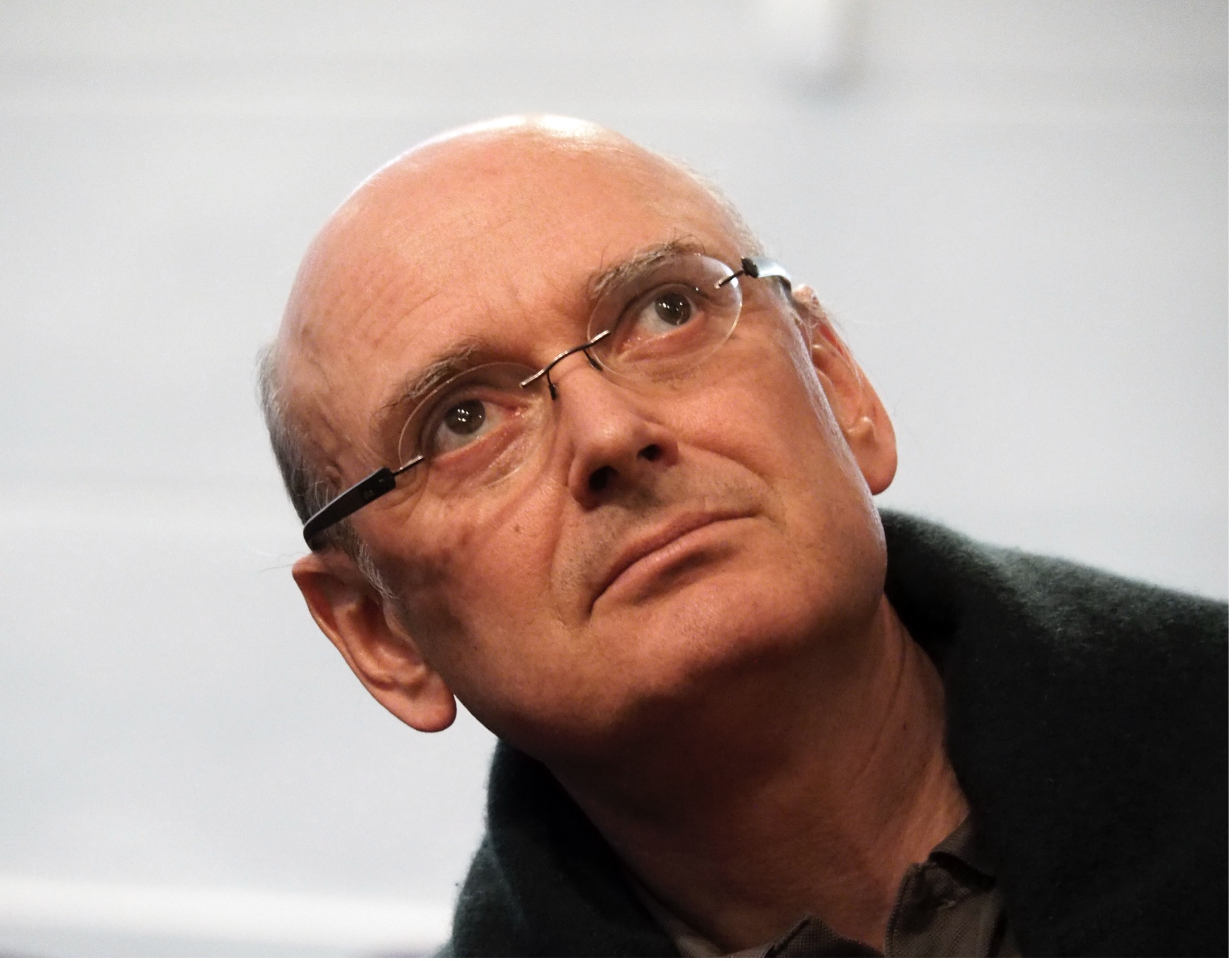
Composer
A composer, professor and performer whose catalogue connects rigorous contemporary writing with the atmosphere of live cultural encounters.
64
Works
37
Recordings
6
Images
Biography, images and works now live together here, so the artistic background supports the events without scattering the journey.
Life and context
Born in Basle in 1959, Mathias Steinauer is a renowned composer and professor whose works have been performed across Europe, Asia, and America.
Mathias Steinauer was born in Basle, Switzerland.
Studied piano, composition, and music theory with Robert Suter and Roland Moser at the Academy of Music in Basle.
Mathias studied composition with the renowned composer György Kurtàg in Budapest from 1986 to 1988.
Mathias was a professor of music theory and composition at the Zurich University of the Arts.
Mathias was the Artistic Director of the ISCM World New Music Days held in Switzerland.
Mathias plays keyboards in the ensemble "The Stone Alphabet".
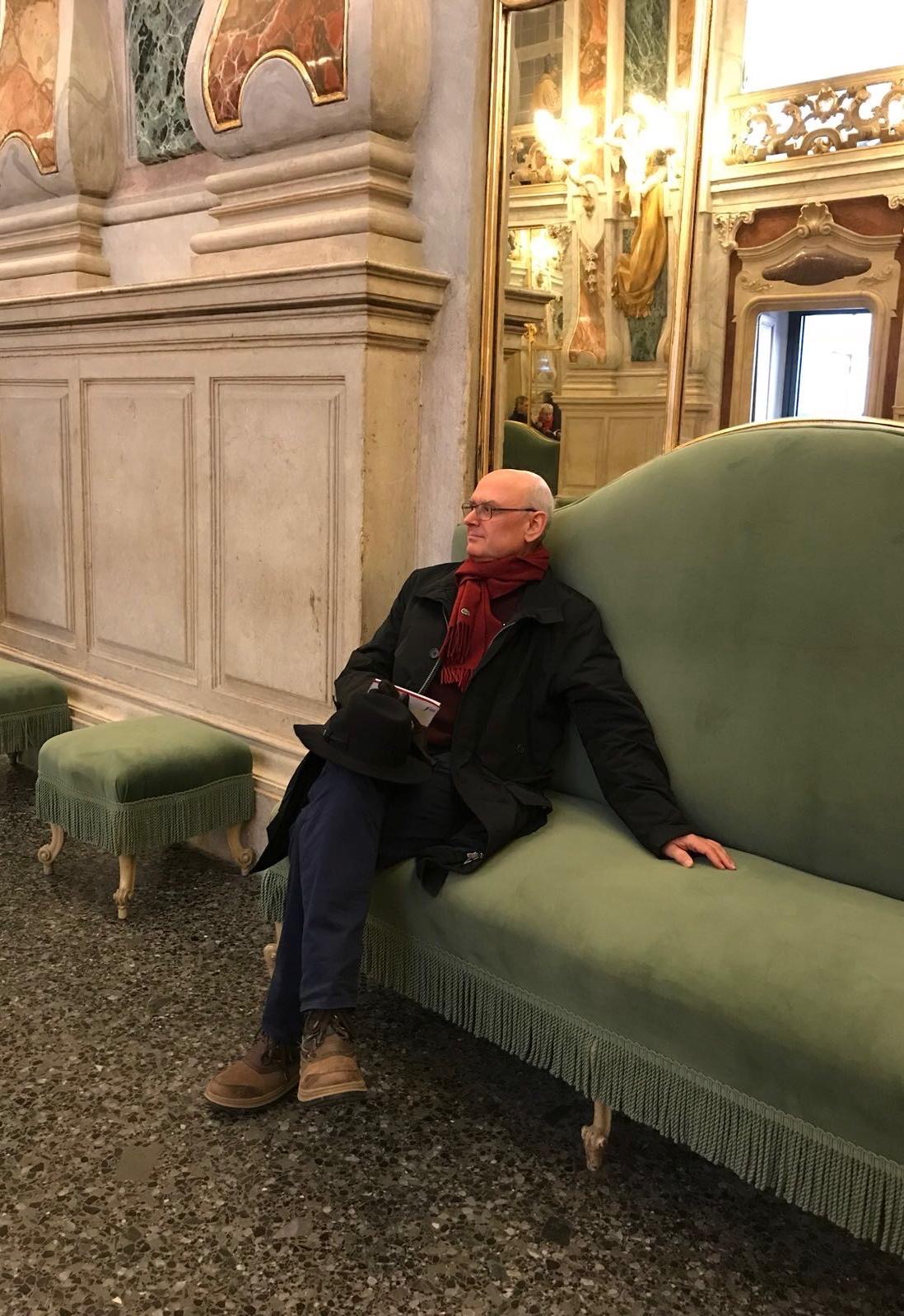
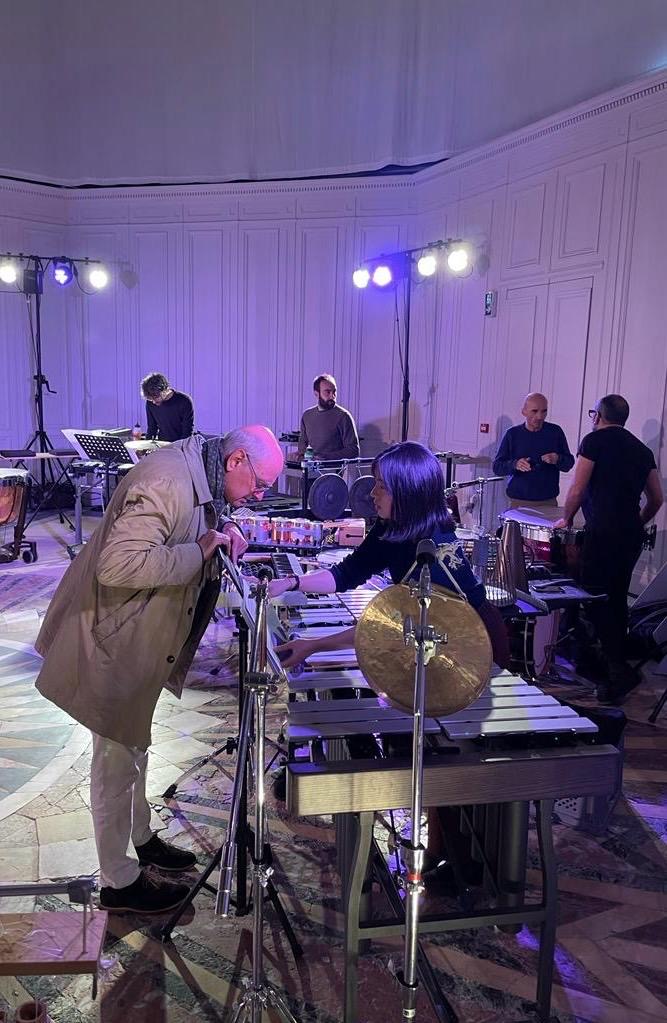
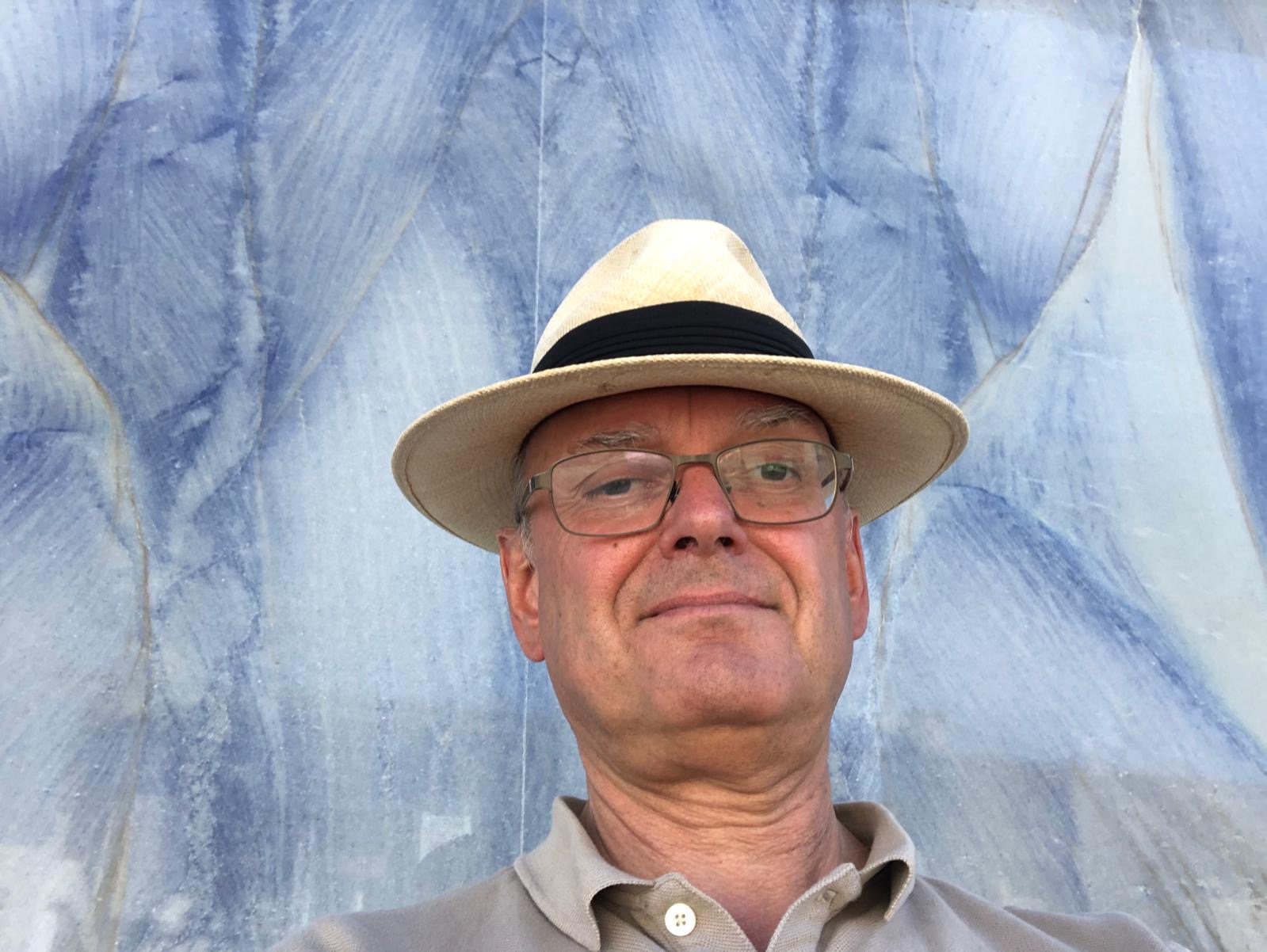
Images
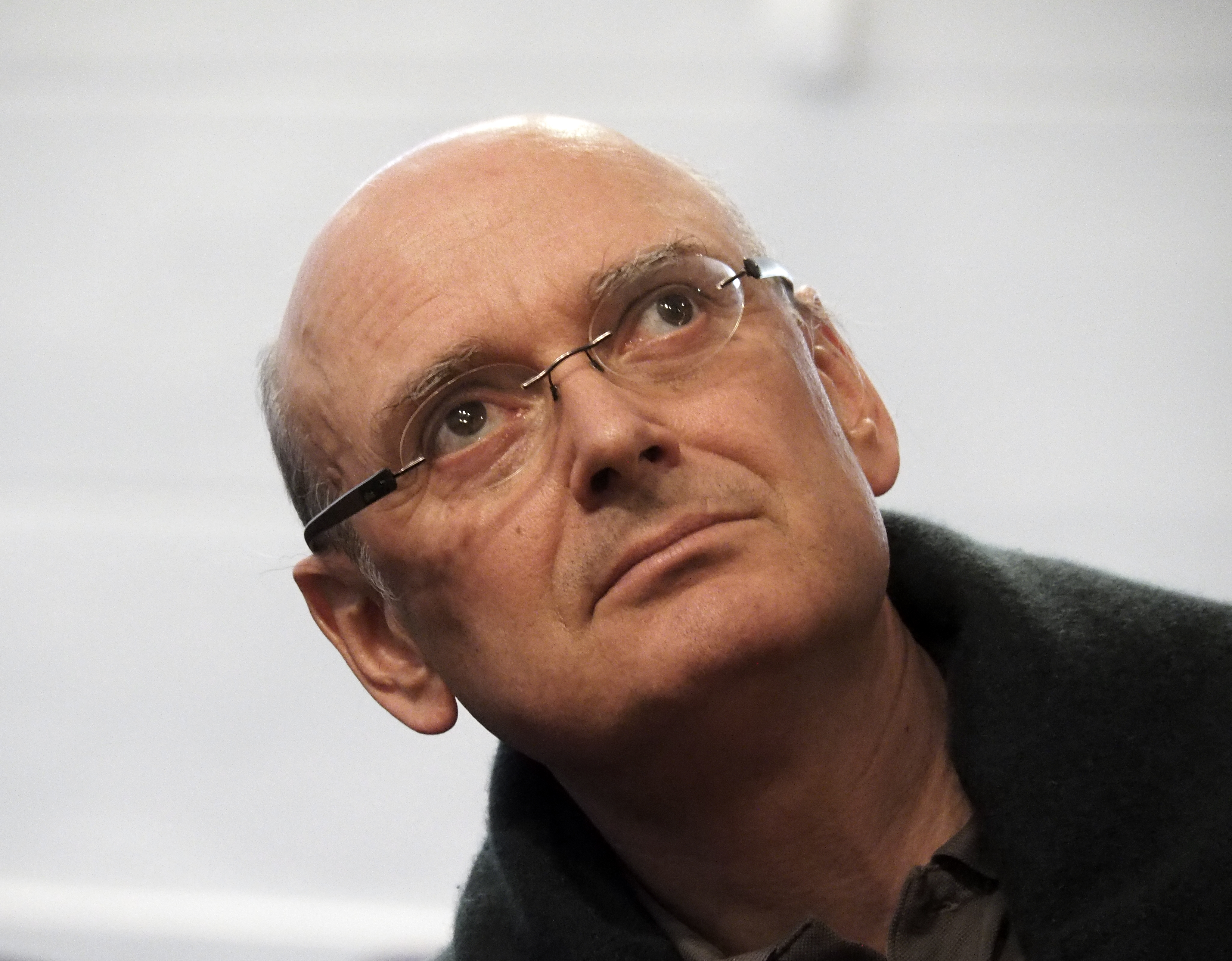
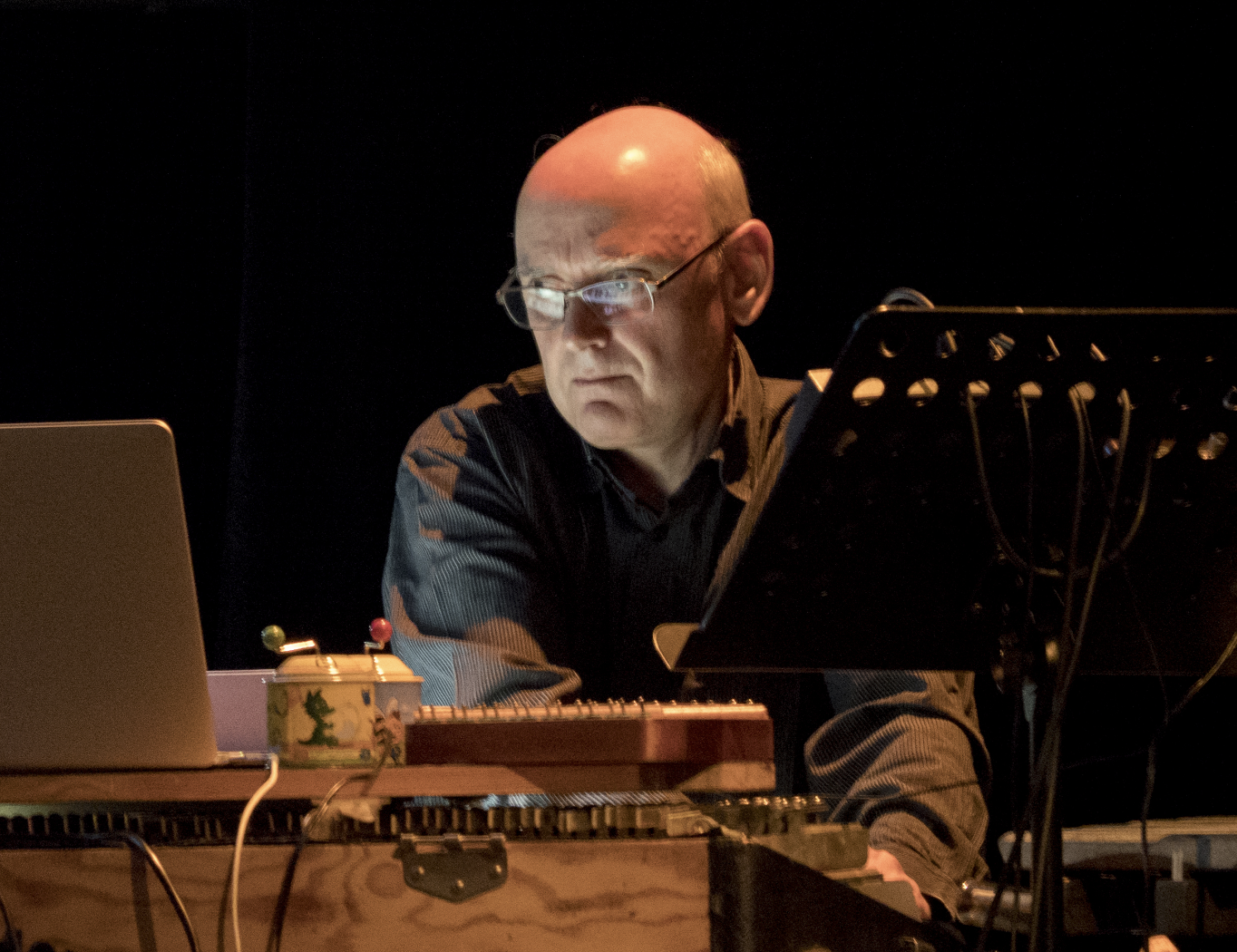
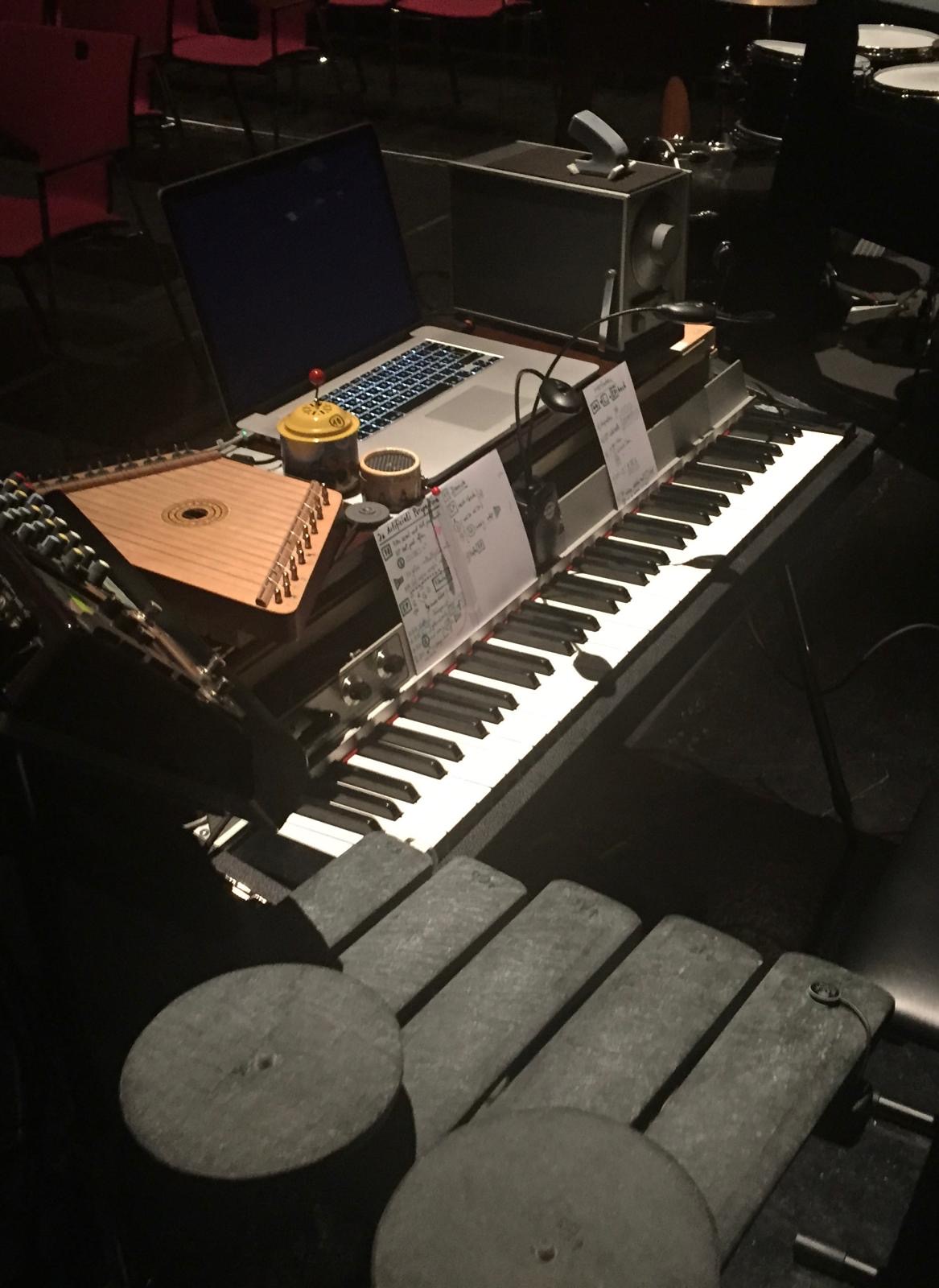
A small visual archive woven into the story: portraits, work moments and traces of the places around the music.
Works & Sounds
The full catalogue remains available, but it is now easier to scan, search and connect with recordings when audio is present.
from “Tectonic Tales”
Flute, clarinet, oboe, bassoon, horn, 2 violins, viola, cello, double bass, playback
GROUNDS is essentially a journey through a soundscape of stone, wood, metal, hair, and breath. Heading toward the end, inclined to the roots… and doesn’t a soft music-historical resonance swing along? From tape (Felix Perret plays stone tables and an orgalitho by Beat Weyeneth), purely natural, electronic-free stone sounds emerge. I arranged them, listened deeply, and imagined from them musical structures that enclose, color, and counterpoint the stone sounds.
Two cellos
The individual portraits are linked by delicately spun “sound threads.” The portrayed people, whose melodies form the basis of the work, are: Tsega (Eritrea), Regula (Zwei Härze, Valais), Carmen (Mis Derfi, Valais), Mursal (Love song, Somalia), Sonam (Prayer, Tibet), Weldeselase (Love song, Eritrea), Regula (Mis Gletscheralphitje, Valais).
Of people and spaces
Saxophone duo, harp, viola
Co-creation by Mathias Steinauer and Slide Ensemble. To the audience: “Imagine a castle – YOUR castle – with park, lake, forest, and of course all the essential details. We’ll do the same. Maybe we’ll help your imagination, maybe we’ll disrupt it. Let’s spend time together in spaces – dreaming.”
from “Tectonic Tales”
6 percussionists with eggs, chirping, stones
In 1860, while splitting a 150-million-year-old limestone slab, a worker in Solnhofen found a fossil resembling a bird feather in every detail. The find was named Archaeopteryx (“Ancient Feather”). Solnhofen, 150 million years ago, resembled a tropical island paradise. Archaeopteryx could fly, but not far. Birds gradually conquered the skies and now count over 10,000 species. Archaeopteryx, icon of this evolutionary success, is now the most famous fossil in the world.
10 portraits, 5 stone strikes and 2 other pieces
Flute quartet, percussion duo, additional performers
A project with people, sounds, stones, and images on the theme “The Matterhorn – an immigrant from Africa.” The 17 pieces are suggestions. The overall form is shaped and defined by the performers. In addition to these 17 works, many other musical “mosaic pieces” by participating composers, improvisers and/or other contributors are welcome and should be integrated.
11 songs on text fragments by 柱甫 Du Fu (712–770)
Voice/synthesizer, recorders, projection
“Einfalt” denotes a certain limitation of understanding and straightforwardness of judgment (...). Our species too is probably only granted a limited time. For millennia, we seem almost incapable of true development. What changes is the way individuals among us are able to express this. Projection visuals: John Lavery (1856–1941).
Electric guitar, video projection
This is a rather quiet homage to Benjamin Britten. Britten is present through his cinematic image and his own reflections on instrumental music, electronic music, and cantability. My music rubs against these thoughts, but also engages with them.
cello, mini harmonica, reception bell
Additionally with mini harmonica and reception bell.
3 pianos, celesta, 6 percussionists
Mr. Palomar stands on the shore and observes the sea. Perhaps an inventory of all possible wave motions might be the key to grasping the complexity of the world: by reducing it to the simplest mechanism.
14 instruments, 3 individual orgalitho stones
Mr. Palomar stands on the shore and observes the sea. Perhaps an inventory of all possible wave motions might be the key to grasping the complexity of the world: by reducing it to the simplest mechanism.
soprano, piano
"Tempora metimur sonitu, umbra, pulvere et unda, nam sonus et lacrima, pulvis et umbra sumus." ("We measure time by sound, shadow, dust, and water, for we are sound and tear, dust and shadow.") This anonymous inscription cannot be dated. It could be of Roman or medieval origin. NB: the piano uses 4 e-bows.
a travel-play
flute, clarinet, piano, percussion, violin, cello, film projection
Musical theatre.
a hypnotic light theatre
flute, clarinet, percussion, piano, violin, cello, projections
Video: "Electric Sheeps", assembled computer screensavers. Totalitarianism is marked by a massive propaganda machine convincing people that black is white and white is black. It simply lets dumps disappear under imaginary flower beds.
a hypnotic light theatre
flute, clarinet, percussion, piano, violin, cello, projections
Video: The Splendor of Color. Totalitarianism is marked by a massive propaganda machine convincing people that black is white and white is black. It simply lets dumps disappear under imaginary flower beds.
Record 11 of the Royal Bavarian Executioner Bartholomäus Ratzenhammer
recorder(s), tenor
Additionally: various acoustic and visual ingredients. Text: Herbert Rosendorfer (Last Meals).
heterotopic idylls
solo Hang, string orchestra
HANG is dangerously close to IDYLL. Simple scales, repetitive patterns, and a lulling sound can easily evoke Arcadia, with all its attributes, personnel, and sound. Nature and art seem to merge in this artificial construct, time and space seem to stand still. Add strings and do not pay hellish attention, and you may unwittingly create ESCAPISM.
solo organ*
* and additional instruments to be played by the performer such as melodica, various wind chimes, a talking calculator from China... I wish for ideology-free, pure listening in space. Therefore, I largely renounce church pomp, virtuosity, and refined counterpoint, often following traces of monophonic movements.
like a sound-installative projection surface
solo clarinet (B♭)
Performance note – staging: the piece must be played by heart and completely veiled in a burka!
a monochrome "shanzhai-recital" in the form of a puzzle clip
piano, small tuned lithophone
A Chinese brand product sounds as a shanzhai bootleg: calculated botch from a small mountain village, produced in a workshop in the southernmost province of Switzerland.
a monochrome “shanzhai-recital” in the form of a visual trick-clip
piano, simultaneously played 5 temple blocks, 2 Chinese woodblocks
A Chinese brand product plays as a shanzhai bootleg: calculated sloppiness from a small mountain village, manufactured in a workshop in Switzerland’s southernmost canton.
flute, clarinet, percussion, grand piano (+ Hohner Clavinet), violin, cello, quadraphonically amplified music boxes
In midlife, the “Dvořák syndrome” hits us. We trace our own path in thought, search for our roots, and succumb to idealization. Tribute to Ephesus, childhood imagination of music boxes, and a “re-ligio” to my op.1.1.
electric guitar, Hohner Clavinet, percussion, two electric violins, electric viola, electric cello, ten music boxes
In midlife, the “Dvořák syndrome” hits us. We trace our own path in thought, search for our roots, and succumb to idealization. Tribute to Ephesus, childhood imagination of music boxes, and a “re-ligio” to my op.1.1.
string orchestra, drone tone
“The keystone is the topmost stone of an arched vault.” Note: The drone tone can be an electric tuning device set to A4 (440Hz), matching the frequency of the string instruments.
cello octet, drone tone
“The keystone is the topmost stone of an arched vault.” Note: The drone tone can be an electric tuning device set to A4 (440Hz), matching the frequency of the string instruments.
string trio and drone tone (4 performers)
“The keystone is the topmost stone of an arched vault.” Note: The drone tone can be an electric tuning device set to A4 (440Hz), matching the frequency of the string instruments.
Three short pieces, a quasi comic-style sequence, for Daniel Fueter.
soprano, horn, piano, double bass, speaking-eating Japanese woman
Texts, in Japanese and German, by Banana Yoshimoto (from “Moonlight Shadow” and “Full Moon”).
Five audio strips
baglama (saz), string quartet
Fragments of missed opportunities based on themes from Mozart's "Alla Turca". 1. Mozart’s ball vs. an authentic image of Turkey 2. Missed chances in the gunpowder fog 3. Orient in the mind (whirling dervish, belly dance, coffee house) 4. Vision of a hymn 5. Siege of the kebab stand in the rain, with sticky dessert.
Chamber opera in five acts
7 singers, flutes, clarinets (also saxophone), horn, percussion, piano (also Hammond and Clavinet), violin, cello, amplified sound recordings
Libretto by Mathias Steinauer with texts by Luigi Malerba (“Pataffio”), Julien Offray de La Mettrie (“The Man Machine”) and Stefano Benni (“The Greatest Chef in France”).
flute, clarinet, percussion, piano, violin, viola, cello, double bass, guitar, video projection and playback CD
My TimeOutMachine is a musical-visual machine which, through pulsation and flashes, attempts to generate a suspension of time. Film: Reinhard Manz
soprano or alto and hammer, piano (with large mallet)
Text by Robert Walser “Laughter and Smiling”. Perhaps the shortest poem by Walser, taken from his early works.
saxophone, horn, trombone, piano, percussion
...Midnight in Milan, late August, at the height of the plague, the Monatti*, or other scoundrels disguised as Monatti with bells on their feet – as required to signal their presence – entered homes and helped themselves to anything...
flute, clarinet, violin, cello, piano, percussion with fabric installation
Both movements explore aspects of “rips”: 1: “Champ d’aviation” Near Bolzano, on 3.2.1998: an armored US combat jet (EA-6B), accidentally flying outside its field, hits and cuts a cable car line. 2: “Champ de mai” On an imaginary May meadow: a couple, a seemingly timeless long tone, icons of memory. An oversized red fabric strip hovers over the audience and is torn from back to front.
clarinet, violin, cello, (Celtic) harp
Secret infatuations, shifting relationships, angry jealousy and unrequited love: broken hearts as far as the eye can see...
Klangfäden. Bundled
4 violins, 2 violas, 2 cellos, double bass, percussion
This hymn to speed(s) lies somewhere between dazzling light stream and baroque pomp.
A Portrait
piano, percussion
I transcribed fragments of S.K.'s improvisations and assembled them into a collage. The only element I added was the framework of this sound portrait: the percussion. *Sergey Kuryokhin (Leningrad, 1954 – St. Petersburg 1996) was, according to his former professors, a “talented good-for-nothing.” He himself considered music the most important, utterly indispensable thing. He was a pianist, composer, improviser, actor, nonconformist, pop star and invented his own system of conducting gestures.
For Gregorio, Armando, Sho, Luca, Simone, Andrea and Alberto
percussion sextet, orchestra, freely improvised solo
Composed, pre-conceived, notated music meets non-notated, mostly unnotatable, improvised music created in the moment. The boundary can be very fine, nebulous, or hazily blurred.
In memoriam Giorgio Bernasconi
percussion sextet and freely improvised solo
Composed, pre-conceived, notated music meets non-notated, mostly unnotatable, improvised music created in the moment. The boundary can be very fine, nebulous, or hazily blurred.
soprano saxophone, horn, trombone, percussion, piano, freely improvised solo
Composed, pre-conceived, notated music meets non-notated, mostly unnotatable, improvised music created in the moment. The boundary can be very fine, nebulous, or hazily blurred.
accordion, tape
Five aspects largely shape the form of the 15 short pieces and the internal nature of the music: Stone as sound: exploration of the tonal possibilities of this new instrument. Stone as formal and microformal inspiration: individual pieces, almost juxtaposed.
lithophone, violin, viola, cello, piano, stones
Five aspects largely determine the shape of the 15 short pieces and the inner nature of the music: stone as sound, as formal and microformal inspiration. Individual pieces, almost juxtaposed.
lithophone, orgalitho, other stones
Five aspects largely determine the shape of the 15 short pieces and the inner nature of the music: stone as sound, as formal and microformal inspiration. Individual pieces, almost juxtaposed.
lithophone (c-c4) or marimba
Five aspects largely determine the shape of the 15 short pieces and the inner nature of the music: stone as sound, as formal and microformal inspiration. Individual pieces, almost juxtaposed.
flute, clarinet, violin, cello, piano, percussion
From an initially colorful tangle, individual sound threads are pulled: silver – black – red/yellow – green/blue – barbed wire I and II – without wire.
saxophone, piano, percussion
From an initially colorful tangle, individual sound threads are pulled: silver – black – red/yellow – green/blue – barbed wire I and II – without wire.
solo flute
Program note: ...after his sensational (benefit) concert at the Royal Albert Hall in London, where, at the height of the evening, instead of the high C, his left eye popped from his skull and flew like a tragic projectile over the heads of the wildly applauding audience...
27 imagination studies on Ancient Greece (Approaches to Stone)
baritone, 2 oboes, heckelphone, bassoon, percussion
Texts: Aristotle, Hippocrates, Ch. Mullack, Xenophon, Aristophanes, Hans Saner, Plato, Leonidas of Tarentum, Epicurus.
chamber orchestra
An almost entirely demythologized night, thematizing two typical nocturnal behaviors. The musical material is fundamentally shaped by nightly changes in pulse rate, body temperature, brain waves and breathing.
flute, clarinet, violin, cello, piano
A short nocturne on the occasion of the "first heartbeats" of the Ensemble Oggimusica.
solo piano/percussion, orchestra
An attempt to comment musically on the history of the sarabande – its presumably Aztec origin and its almost 200-year-long chastisement. Spatial music. Performing material, small auxiliary instruments, and two preparation devices for the grand piano (Steinway D-274) are available for loan.
percussion trio (or string-percussion trio)
Lightly scenic. For glockenspiel, 3 flexatones, wind machine, 2 tone bars (dis''', dis'''') and a remote-controlled windmill.
A little wedding music
mezzo-soprano, organ
Texts: some Japanese haikus, Baroque poetry, and computer terms. Lovingly ironic music; cyclical; in twelve short sections.
violin, viola
Quite intimate music of memory and imagination. Individual duets may be arranged freely. (For Elena, for her wedding)
clarinet, violin, cello, piano
Based on three fantastic stories by Italo Calvino about the creation of the world: 1. Sky of Stone / 2. Without Colors / 3. Meteorites.
clarinet, horn, violin, piano
Based on three fantastic stories by Italo Calvino about the creation of the world: 1. Sky of Stone / 2. Without Colors / 3. Meteorites.
6 voices, 5 recorder players, 6 viols, 2 percussionists
New adaptation of manuscripts recently discovered in the Vatican by an anonymous 12th-century composer who partially anticipated all of music history. Spatial music.
18 engravings, still lifes and grotesques
solo soprano, mixed choir, chamber choir, children’s voice, instrumental ensemble
Texts: G. Ungaretti, H. Saner, R. Rechsteiner, E.M. Cioran, R. Heinzelmann, M. Buselmeier, E. Canetti, H. Burger, G. Bachmann. A torn, contradictory cycle with a downward tendency that should be performed only in a church, involving the entire space.
flute, orchestra
Against the background of Jean Gebser’s idea of a five-stage transformation of human consciousness (archaic, magical, mythical, mental, integral), the soloist embodies the individual changing within its environment.
14 signs
chamber orchestra
Quasi-archaeological finds – around the Egyptian Book of the Dead from the astonished perspective of a 20th century human. Like 14 fragments of a lost culture: incomplete parts of a barely comprehensible, multilayered whole. Duat – or Amduat – the underworld of the ancient Egyptians, the inversion of everything earthly.
wind ensemble, 2 percussionists, piano
In 3 movements: Grande danse froide, 9 micro-studies, Epilogue. Engraved in Nuremberg’s old fire bell: “When I, bell, sound, it is never for trivial matters (…).”
baritone solo, women's choir, recorder ensemble, large orchestra
Despite the large instrumentation: mostly calm music, inspired by the simple texts of a painter (Hans Erni). Not only sounds, lines, and rhythms are used as color, but also the instruments of the orchestra, whose timbral palette is extended by women's voices and bass recorders. – The natural harmonic series is the structural basis of the four songs. 1) delta flight 2) tonight 3) awakening 4) everything flows.
string quartet
Lightly theatrical. In the third sketch: all four play together on the cello and simultaneously “detune” some strings. No.1: Bells, a homage to P. Pasolini – No.2: A tribute to the immense expressiveness of G. Kurtág – No.3: Like a dark, heavy chorale.
3 cellos, 2 percussionists
A game with overlapping forms. Written for Thomas Demenga and his cello class, as well as the percussion class at the Basel Music Academy.
percussion trio, large tape loop
To Dante. Thoughts triggered by the reading of “The Divine Comedy”. – However: there is no sign of “purification”.
xylophone, marimba, 2 music boxes (3 percussionists in total)
An almost theatrical confrontation: childlike-absorbed play versus perfectly cold virtuosity. Written on commission by the Basel Percussion Trio.
Events
The archive gives context; the events bring the work into the room. Explore upcoming concerts, festivals and bookable moments.